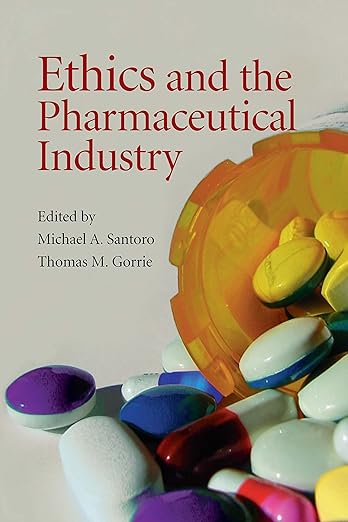
Professor
Michael A. Santoro,
J.D., Ph.D.

Professor of Management & Entrepreneurship

Leavey School of Business, Santa Clara University

With decades of scholarship in corporate governance, human rights, and business ethics — and a legal career spanning corporate law, federal testimony, and expert witness work in high-profile cases — Professor Santoro brings the precise expertise to address the most pressing question asked today: who is accountable when AI systems fail?

Now, he helps governments, institutions, and legal practitioners close the gap between where AI decisions are made and where accountability is triggered — challenging the prevailing assumption of human oversight after deployment. His work argues that accountability must be structured into AI systems at the point of design and delegation.
View CV →
Professor Michael A. Santoro

Education

  • Ph.D., Public Policy · Harvard University, 1997
  • M.P.A. · Harvard University, 1990
  • J.D. · New York University School of Law, 1981
  • A.B. · Oberlin College, 1976
  • Fulbright Fellow · University of Hong Kong, 1993–1994
Member of the New York Bar · Expert Witness in Federal Cases · U.S. Senate Testimony · M&SOM Best Paper Award · Co-Founder, Business & Human Rights Journal (Cambridge UP)

Michael A. Santoro is Professor of Management and Entrepreneurship at the Leavey School of Business at Santa Clara University. Previously he was a Professor at Rutgers Business School for two decades. As a Research Associate at Harvard Business School, Prof. Santoro authored numerous case studies and teaching notes. He practices the Harvard “case method” of teaching which emphasizes guided discussion, decision-making, and experiential learning for students. He has given a number of “train the trainers” seminars on the art and science of case method teaching for both business and law faculty.

Prof. Santoro was voted “Professor of the Year” by Rutgers MBA students in 2013. He was a Fellow of the RBS Teaching Excellence Center and has also served as a GE Teaching Fellow.

Prof. Santoro has been a visiting faculty member at the University of Notre Dame, the Shanghai Advanced Institute of Finance at Shanghai Jiao Tong University, the Sinopec Management Institute in Beijing, and the University of Zurich, as well as an Adjunct Lecturer and Teaching Fellow at Harvard’s John F. Kennedy School of Government where he taught ethics and economics courses.

Speaking

Prof. Santoro is a frequent featured speaker on business ethics, pharmaceutical industry ethics, human rights, and financial industry ethics at numerous venues, including:

Stanford Law SchoolUniversity of PennsylvaniaUniversity of MilanRedlands UniversityThe London School of EconomicsGeorge Washington UniversityThe Shanghai Academy of Social SciencesTufts UniversityCornell UniversityFederal Reserve Bank of New YorkColumbia UniversityThe Brookings InstitutionOberlin CollegeWorld Affairs CouncilPace UniversityEconomic Strategy InstituteEmory UniversityThe Association of the Bar of the City of New YorkPrinceton UniversityThe Commonwealth Club of San FranciscoPomona CollegeThe Asia SocietyThe Keck InstituteAmerican Bar AssociationThe University of North Carolina

Below you will find an introduction to business ethics. The whole cycle of videos takes approximately 24 minutes to complete.

#1

Business Ethics: Three Levels of Analysis

6 minutes

#2

What Is Ethics

7 minutes

#3

Ethics and Profits

4 minutes

#4

Ethics and Law

7 minutes

For a deeper dive into ethical theory...
Watch Prof. Santoro’s 22-minute lecture on making business decisions using the Harvard Business School’s “Moral Framework.”
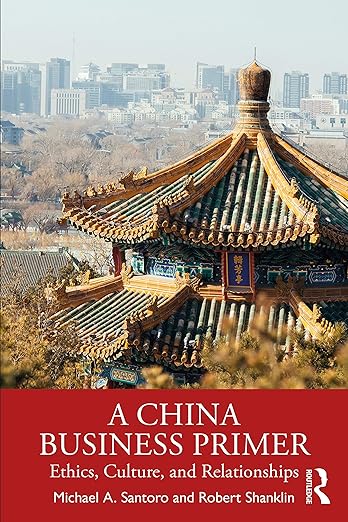
A China Business Primer book cover

A China Business Primer:Ethics, Culture, and Relationships

Routledge, 2021

Wall Street Values book cover

Wall Street Values:Business Ethics and the Global Financial Crisis

Cambridge UP, 2013

Ethics and the Pharmaceutical Industry book cover

Ethics and the Pharmaceutical Industry

Cambridge UP, 2005

China 2020 book cover

China 2020:How Western Business Can — and Should — Influence Social and Political Change in the Coming Decade

Cornell UP, 2009

Profits and Principles book cover

Profits and Principles:Global Capitalism and Human Rights in China

Cornell UP, 2000

Op-Eds and Blogs

Articles

Prof. Santoro firmly believes that the link between good ethics and good business is ever tightening in the modern business environment. Companies have two mechanisms for successfully managing ethics that are akin to the way your computer works. There’s the hardware — the policies and processes that a company institutionalizes. Then there’s the software — the company culture, the leadership and “tone at the top.”

There’s a huge competitive edge to be gained when your hardware is properly aligned to the right ethical standards. Not only does well designed hardware protect the company, but the right hardware also guides people to make choices that are both principled and profitable.

Read more →

Cultivating a community that centers ethics and human rights at the heart of Jesuit business education and research.

As the economy grows to be increasingly globalized, businesses all over the world face more human rights challenges. From supply chain to PR, every aspect of a business and decision made interacts with business ethics.

Researchers in the Michael A. Santoro Business Ethics and Human Rights Lab (MAS BEHR), along with professionals across the globe, explore these interactions to identify business models that address human rights. The lab is research based and composed of skilled undergraduates chosen by Professor of Management and Entrepreneurship Michael Santoro.

The MAS BEHR is one of the first undergraduate research labs of its kind. Through working closely with Professor Santoro’s recent research, fellows think critically about current human rights challenges across multiple industries.

Read more →

Email

santoro.michael@gmail.com

Address

Leavey School of Business
Santa Clara University
500 El Camino Real
Santa Clara, CA 95053

‘He who exercises power by means of his virtue may be compared to the north star, which keeps its place while all the other stars revolve around it.’

— Confucius